

Ellie Simmonds, MSc
University of Bath, Psychology
Ellie Simmonds, MSc in Psychology from University of Bath. Ellie is an associate lecturer on psychometric assessments and has extensive knowledge of the 16-type model.

Not sure what Myers Briggs type you are? Take a free Jungian Type (16 types) test to find out what your type is.
Page contents:
An ESFJ will value meaningful and harmonious relationships where their loyalty, trust, and generosity are reciprocated. As partners and friends, they are attentive, and supportive. They approach relationships with the intention to do whatever it takes to maintain them for a lifetime.
Enduring relationships are foundational to the lives of ESFJ. Warm and open, they work to establish a basis of mutual openness and trust. They base a significant part of their identity on the people with whom they associate so they choose their mates carefully. They are passionately loyal to the people closest to them and rarely see their loved ones in anything but the best possible light.
An ESFJ type is likely to:
ESFJs often hold traditional values close to their hearts. With the rest of their lives in mind, they seek out partners with whom they can fulfil all of society's expectations related to courtship, marriage, parenthood, and so on. An appropriate match will share the ESFJs values, views, and religious beliefs.

You'd be excused for thinking such a sociable personality could be inclined to casual relationships, however, with romance, ESFJs prefer the security and support of solid relationships.
ESFJs can be counted upon to make traditional romantic gestures, and they expect that their partners will reciprocate. When they begin new relationships, they are willing and prepared to put a lot of work into making sure the partnership is mutually fulfilling. They expect to be met halfway.
| Beneficial dating traits | Negative dating traits | |
|---|---|---|
| Willingness to make and receive romantic gestures and overtures. | High expectations, tendency to set themselves up for disappointment. | |
| Ability to create safe and welcoming space for partners to open up and be themselves. | Difficulty changing their mind after receiving first impressions. | |
| They never forget birthdays and important anniversaries. | May miss red flags and overlook faults in new or prospective partners. | |
| Affectionate and open-hearted. | Tendency to sacrifice their own interests and needs in order to conform to a partner. | |
| Encouraging and nurturing, penchant for bringing out the best in those they love. | They risk burnout due to over focusing on their partner's needs and desires. |
ESFJs are value deeply committed long-term relationships in which partners support and nurture each other while sharing a home, raising a family, and fulfilling other traditional obligations. A double ESFJ partnership usually leads to a cosy and bustling household that is likely to be the hub of traditional family and community celebrations. The pair may create such a strong shared identity that they almost forget they are individuals. As they concentrate their efforts on maintaining stability for their family and their wide social circle, they risk neglecting their own relationship and inner lives.
ESFJs often build great relationships with people who share their sensing and feeling traits. ISFPs, in particular can encourage ESFJs to focus on their own needs and open up to new experiences and ideas.
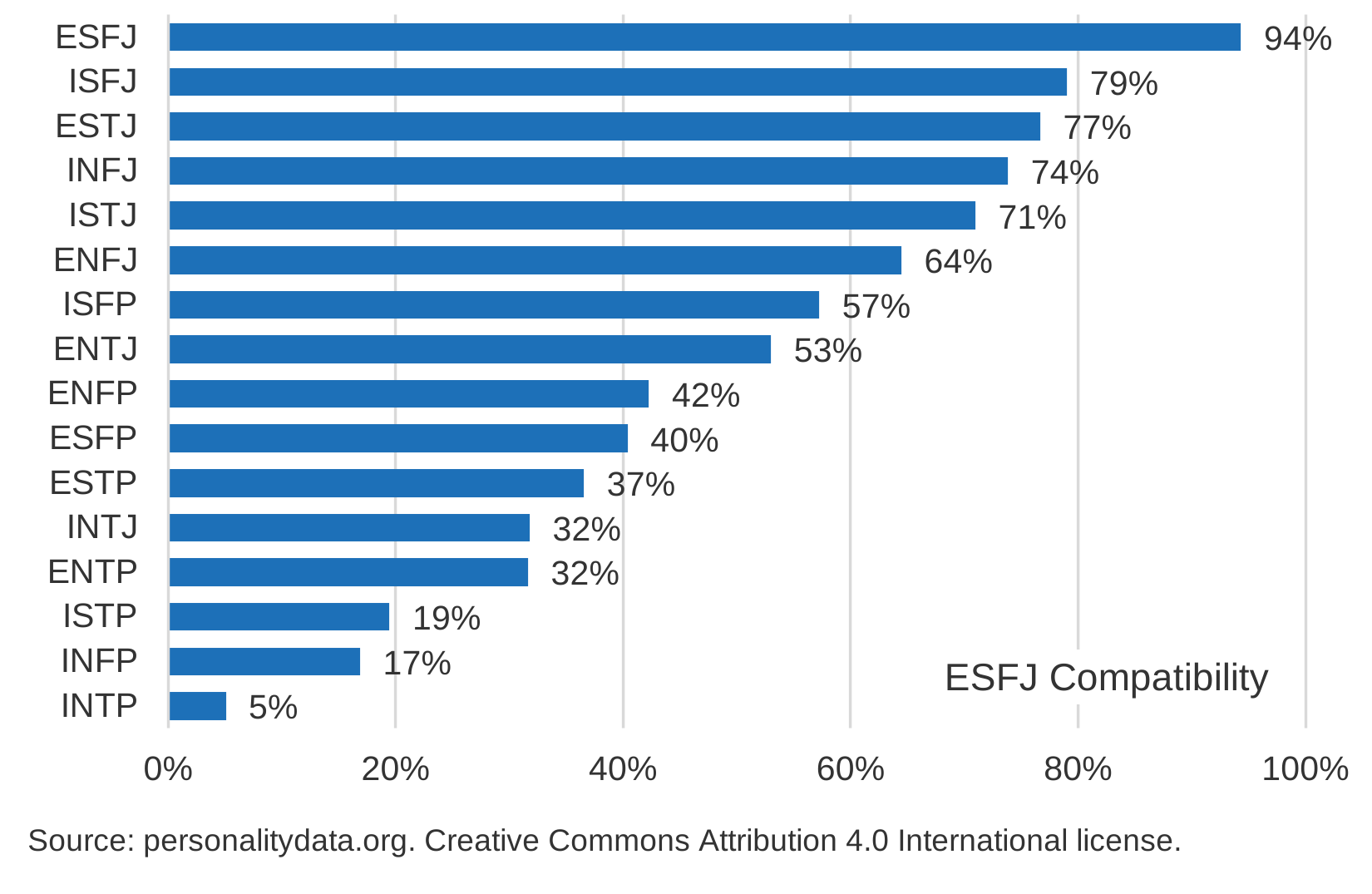
Figure 1: ESFJ partner compatibility
Percentage compatibility between ESFJ and other types
What this chart shows
This chart shows an estimate of the compatibility between ESFJ types and other types. We see that ESFJ types are most likely to be compatible with other ESFJs, and least likely to be compatible with an INTP. This 'like-minds' effect is often the case (see Figure 2 below).
Notes:Figure 2: 16 type model partner compatibility
Percentage compatibility between the 16 factor model (Myers Briggs®) types

What this chart shows
This chart shows an estimate of the compatibility between Myers Briggs® types. Our research shows that the strongest match is usually with someone of the same type. Another general pattern we observe is extraverts are generally more compatible with other extraverts, and introverts are more compatible with other introverts. This data supports the adage "birds of a feather flock together” and discredits the often-quoted mantra "opposites attract".
Across almost all types, the most compatible combination is with someone of an identical type. Within this general trend, the degree of compatibility varies slightly. For example, the compatibility between two INFP types is very high (at 95%) whereas the compatibility between two INTJs is 86%. The only exception to the observation that the best match is with someone of the same type is for ESFP types. The researchers note that ESFP types do still strongly favor other extraverts.
Notes:As caring, duty-bound and highly social partners, ESFJs have a lot to offer. They are always ready to believe the best of those they love. They know that successful relationships require dedicated effort. Once committed, they will do everything they can to keep their partners happy and fulfilled.
 Keep an open mind beyond your first impressions. Allow your date to surprise you as you continue to get to know them.
Let your partner know if you are feeling neglected, and feel free to end the relationship if they aren't as committed as you are.
Do pay attention to red flags and warning bells. Don't let your desire to believe the best about your partner set you up for later disappointment.
Don't avoid conflicts or settle for hasty solutions that may be ineffective. Stay with difficult conversations until you are certain that issues are resolved.
Keep an open mind beyond your first impressions. Allow your date to surprise you as you continue to get to know them.
Let your partner know if you are feeling neglected, and feel free to end the relationship if they aren't as committed as you are.
Do pay attention to red flags and warning bells. Don't let your desire to believe the best about your partner set you up for later disappointment.
Don't avoid conflicts or settle for hasty solutions that may be ineffective. Stay with difficult conversations until you are certain that issues are resolved.
 Don't let partners take advantage of your hard work and good will.
Don't avoid conflicts or settle for hasty solutions that may be ineffective. Stay with difficult conversations until you are certain that issues are resolved.
Don't let partners take advantage of your hard work and good will.
Don't avoid conflicts or settle for hasty solutions that may be ineffective. Stay with difficult conversations until you are certain that issues are resolved.
ESFJs are devoted romantics who bring out the best in those they love. Warm and caring, they follow traditions with enthusiasm and create stable, nurturing homes.
Even if you don't usually follow traditions, make an effort to experience and understand this important part of an ESFJs life.
ESFJs do care quite a bit about appearances and first impressions, so be sure to dress appropriately when going out with an ESFJ.
Express gratitude and appreciation by reciprocating the kind and helpful things ESFJs do for you.
Take time to clarify and resolve misunderstandings with your ESFJ when they come up. They may need some extra encouragement and support in this area.
Don't expect them to openly embrace new experiences. Understand that they see many activities as performances and worry about how they will be judged. Make efforts to boost their confidence.
Some people value having a few close friends while others prefer to have a large number of casual acquaintances. ESFJS don't fall into either of these categories. They make and keep numerous friendships throughout their lives, maintaining close bonds with schoolmates, former colleagues, ex-lovers, and nearly everyone else they've come to care about. Reflecting the size of their broad social circles, their homes are often designed to entertain large groups for festive holiday traditions.
ESFJ Types have very strong emotional intelligence. This helps them in their social interactions allowing them to easily build friendships with others.
ESFJs pride themselves on being available whenever a friend needs a listening ear, a bit of encouragement, or assistance with a practical matter. They often know what their friends need before they've had a chance to ask. They may not say as much, but they are vulnerable to hurt feelings when they feel that their dedication isn't reciprocated or that friends take them for granted. Expressions of gratitude and small, practical favors can go a long way toward maintaining a healthy friendship with an ESFJ.
ESFJs see people, including themselves, more as communities and as families than as individuals. Their social standing, their obligations, and their relationships with others are of the utmost importance. They are caring and generous, believing that the gifts and services they provide within their communities create ripples that benefit everyone. They like to be appreciated and to impress others with their accomplishments.
As an ESFJ, this is what can be done to improve relationships with other people:
University of Bath, Psychology
Ellie Simmonds, MSc in Psychology from University of Bath. Ellie is an associate lecturer on psychometric assessments and has extensive knowledge of the 16-type model.
 ESFJ Extended Subtypes
