

Ellie Simmonds, MSc
University of Bath, Psychology
Ellie Simmonds, MSc in Psychology from University of Bath. Ellie is an associate lecturer on psychometric assessments and has extensive knowledge of the 16-type model.

Not sure what Myers Briggs type you are? Take a free Jungian Type (16 types) test to find out what your type is.
Page contents:
An ideal ISTP career is one that allows them to practice the qualities they naturally possess; the ability to find practical solutions to tangible problems, the ability to follow their own style when solving a problem. When the work allows an ISTP to put forth their best talents, there is a greater chance of success for them, for the organisation they're working for and for the end beneficiaries.

ISTPs are passionately interested in knowing what can be verified as real and confirmed through the senses. They can be counted upon to conduct rigorous experiments and investigations. They are not inclined to put their own ego on the line when pursuing a hypothesis, and they have the flexibility to accept new information even if it drastically alters what was previously known.
ISTPs remain cool and objective in gruesome and tragic situations that repel or upset most people. This ability to observe, analyze, and remember details in a stressful scenario allows them to function well in particular roles from acting as first responders to medical emergencies, in combat situations, to crime scene investigators, to even communicating bad news to other people even outside of a career-related scenario.
Stemming from the ISTP's drive to tinker, any work which will produce some physical end result will bring a great feeling of satisfaction to an ISTP, far more so than work which does not have an easily defined end goal. This may feel like an incomplete project to the ISTP and one which they may never finish if by its very nature it cannot be measured in completed segments.
Some of the most versatile and competitive athletes have been ISTPs. They find a physical challenge invigorating and they constantly strive to break their own records. They often excel on the side-lines as coaches and physiologists and other roles revolving around competition as well, where they utilize their ability to make hard calls and logic-driven decisions based on their observations.

ISTPs are goal-oriented workers who like to work quickly and make measurable progress. They have little patience for repetitive paperwork and formalities. Having to find or create work while waiting for inefficient processes that they can't control can be torturous for ISTPs.
Like anyone, ISTPs can benefit from jobs that give them an opportunity to develop and exercise their social skills. This doesn't mean they should opt for roles where they spend the bulk of their time building a professional network or relating to people on an emotional level. Jobs where interactions are short and scripted are a good starting point for ISTPs.
ISTPs are more interested in concrete things than abstract ideas. They may be able to think through the intricacies of complex mechanical processes in order to diagnose and repair a faulty engine, but they aren't as keen on trying to explain the historical significance of an event or articulating a plan that will bolster anxious shareholders.
ISTPs have analytical minds and are sometimes drawn to solitary jobs where they spend the majority of their time researching and writing as they work to solve some of the universe's most fascinating puzzles such as the nature of physical reality or the human mind. The four walls of an office, no matter how pleasant, can feel like confinement after some time, and the ISTP will likely seek out opportunities for more hands-on exploration.
Identifying which type each person who you are managing can help significantly in bringing the best out of your team during any project. ISTPs are a valuable addition to any team and their unique preferences can be of great help. When given the freedom to pursue challenging goals, ISTPs prove to be energetic and focused employees who continue to exceed their own records as they hone their skills.
Although ISTPs are driven by curiosity, they don't ask many questions. This is because they are so independent and prefer to discover answers to their questions on their own, so it shouldn't be taken as a lack of interest. Managers may question their ability to stay focused when their workspaces are cluttered and their time is occupied with multiple concurrent projects, but they are usually much more attentive and motivated than they appear to be. A manager might be tempted to require ISTP employees to tidy their workspaces and reduce distractions, and by all means do ask this of them when it can become hazardous to themselves or to other employees or be part of a company policy to reduce risks, such as the very common "clean desk" policy now used by many offices, however when not necessary these requests for tidiness and order could hinder an ISTP personality type's performance. They know exactly how much stimulation their minds need for optimal functionality, and it's best if they can arrange that themselves.

ISTPs achieve the best results when left to their own devices.
Managers of ISTPs are sometimes dismayed when ice breaker activities that are meant to foster team cohesion and build team spirit fail to crack an ISTP's shell. ISTPs are usually uncomfortable when put on the spot and asked how they feel about something or when prompted to share details about their personal lives with a group of new colleagues. Although they may or may not ever bond and form friendships with their co-workers, they usually do prove to be productive workers who can deliver surprising results when given the space to follow their interests independently.
ISTP careers can be anything, but above all they are challenge seekers. If they are being set objectives and goals this will help channel their industrious ability.
Understanding how different people approach their work and their relationships with colleagues can help make for a more productive and collaborative workplace. Let's see what it's like to work with an ISTP.

ISTPs are focused on the task infront of them.
ISTPs are highly independent and seek challenges. They can become so busy with their own thoughts and projects that they neglect to notice what's going on with their colleagues. Their quests for knowledge and their passion for devising better methods may lead them to make sudden changes that can be unsettling for colleagues who work closely with them. It may not occur to ISTPs to share their thought processes and plans, so colleagues may want to check in frequently and ask for clarifications as needed.
Establishing professional relationships with other colleagues is not high on an ISTP's list of priorities when at work.
ISTP colleagues may appear shy, distractible, prickly, or disinterested in attempts to bond with them. They are not likely to participate much in office chit-chat about weekend activities and family life, but that doesn't mean they harbour any unfriendly feelings. ISTPs don't often decide that they either like or dislike individuals. This can be frustrating or unnerving for extraverts and feeling types who are eager to establish good bonds with people, or at least like to know where they stand. This is possible with ISTPs, it just takes more time.
What are most and least popular ISTP career choices?
Figure 1: Survey data of which careers ISTPs currently work in
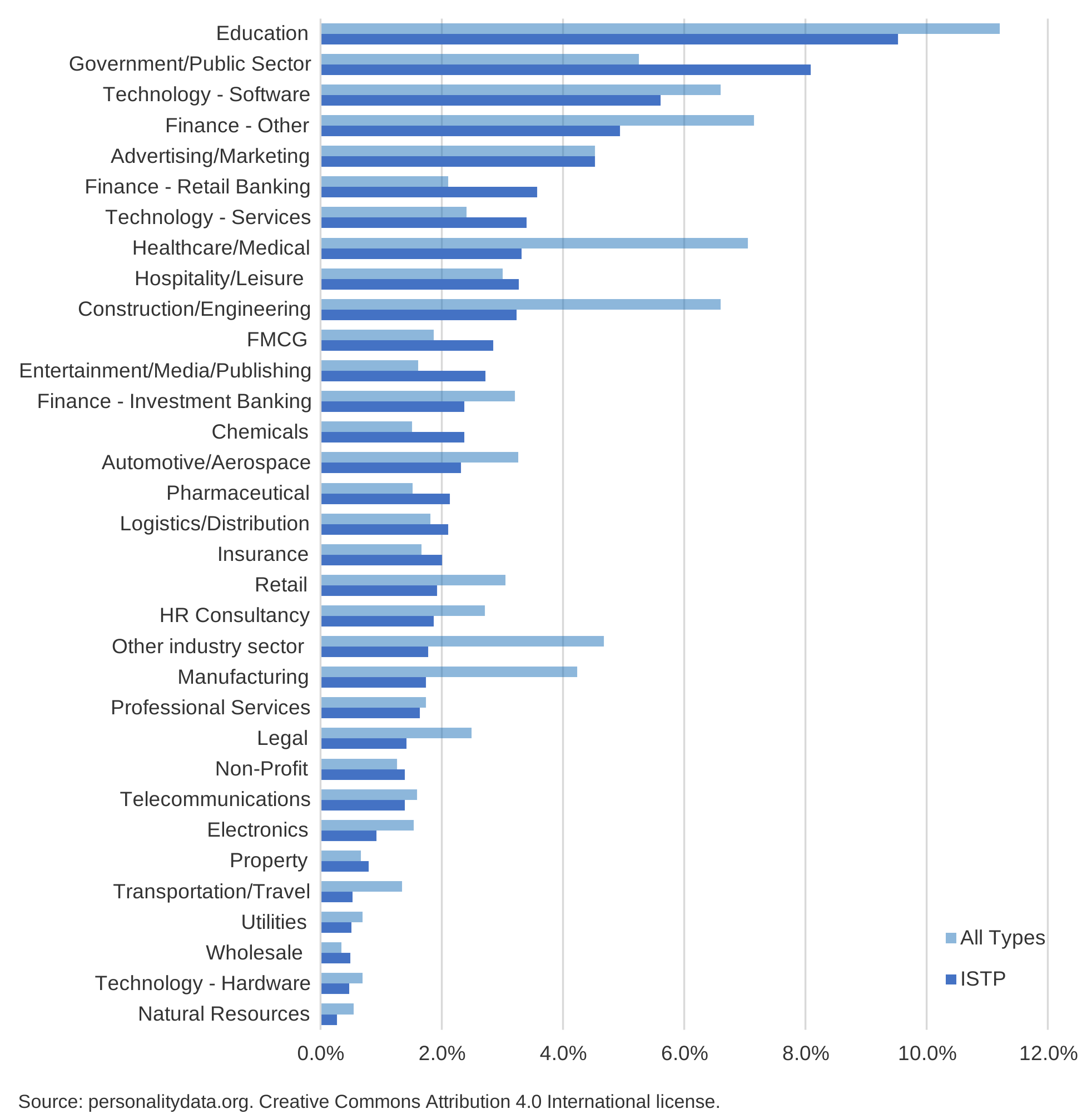
What this chart shows
This chart shows the percent of ISTPs who work in each industry sector compared to all types. This highlights which careers have an above-average and below-average proportion of ISTP types working in them. Although it is difficult to see straight away, there are many more ISTPs working in the Government/Public Sector than non-ISTPs. That aside, Finance - Retail Banking, and Technology - Services, and FMCG are sectors which allow an ISTP to work to their own methods as long as results are produced and can have the flexibility for an ISTP career. Most notable in the opposite spectrum of the data is the stark difference of how few ISTPs are in the Healthcare/Medical sector. This might allude to the ISTP's lack of interest in creating and fostering relations with other people when they aren't strictly needed, which would make caring and nursing roles quite rare for an ISTP career.
Notes:
University of Bath, Psychology
Ellie Simmonds, MSc in Psychology from University of Bath. Ellie is an associate lecturer on psychometric assessments and has extensive knowledge of the 16-type model.
 ISTP Relationships
