

Ellie Simmonds, MSc
University of Bath, Psychology
Ellie Simmonds, MSc in Psychology from University of Bath. Ellie is an associate lecturer on psychometric assessments and has extensive knowledge of the 16-type model.

Not sure what Myers Briggs type you are? Take a free Jungian Type (16 types) test to find out what your type is.
Page contents:
It should come as no surprise that the ever-adventurous ESTP loves a fun, outgoing, less strings attached relationship than your average Joe. They love to share hobbies and activities with their partners, but stray away from serious commitment. They strive to be with individuals who love the thrill of adventure, and do their best to make every single day exciting.
ESTPs approach their relationships just like they do with everything else in their life: with spontaneity, excitement, and the commitment to make sure no day is alike. ESTPs encourage their partners to step outside of their comfort zones, try new things, and enjoy life through a lens of adventure. They see relationships as an opportunity to date lots of people with minimal to no strings attached so they can continue to live an exceedingly adventurous lifestyle with their partners.
An ESTP type is likely to:

ESTPs need to be given the space and freedom to explore their passions, a relationship with someone who isn't willing to allow this will struggle.
ESTP types are commonly known for their dislike of commitment, but they desire to be in relationships and surrounded by others. They constantly crave their independence and autonomy, yet love to have a companion to enjoy their adventurous lifestyle with. It is extremely important for them to be able to share hobbies, interests and activities with their partner, leading them to consistently push their companion out of their comfort zone. Encouraging others to try new things allows room for growth while also doing something spontaneous all at the same time. However, it is extremely important to them that their significant other appreciates their willingness to get their hands dirty to show them a good time, no matter the level of commitment within the relationship.

ESTPs are fun-loving and will seek a partner who wants to join them on their adventure
It can be difficult for others to want to stay in such a long-term relationship with such little commitment and high expectations. ESTPs are known for focusing so much on the physical needs of their partner that they tend to neglect the emotional connections they desire, leading to conflict within the relationship. This can be hard for an ESTP type to realize, because when they are dedicating their time to their partner's physical needs, they feel they are able to dodge the commitment they are constantly trying so hard to avoid.
| Beneficial dating traits | Negative dating traits |
|---|---|
| They will strive for a relationship filled with excitement, adventure, and growth. | Their lack of commitment. They have a no-strings-attached mentality making it hard for others to want to be in a dedicated and serious long-term relationship with them. |
| ESTPs understand the need for independence within a relationship and being able to do things they enjoy. | Tend to laugh off things as seeming unimportant to avoid dwelling on situations. |
| No day will ever be the same. They thrive giving their partners thrilling adventures, often encouraging them to go outside of their comfort zones. | ESTP types are known for missing social cues of when their partner wants to take their relationship to the next level. |
| Their no-strings-attached mentality allows for an open yet extremely caring and attentive relationship. | EThey focus so much on the physical needs of their partners they often neglect their need for emotional connection. |
| ESTPs are extremely attentive to the physical needs of their partners. | ESTPs need a lot of freedom and autonomy in their relationships, which can be difficult for others to give because of the drastic differences in desired of the level of freedom. |
When dating an ESTP type, it helps if they both share the same desired level of freedom, autonomy, and adventure within their relationship. This allows for them to live their lives exactly as they want to: filled with spontaneity and impulsiveness all while fulfilling their desire to be with someone else. However, this can also be a large issue within the relationship because when they are focusing so much on the physical aspect of their relationship, they struggle to create any sort of emotional connection.
The freedom and autonomy an ESTP type desires also proves to attract a variety of other MBTI personality types. Other types are attracted to the adventure and excitement ESTPs bring to relationships. It pushes them outside of their comfort zone to do things they would never do without the encouragement of their partner. It provides growth within the relationship and can establish an emotional connection without an ESTP realizing it has happened.
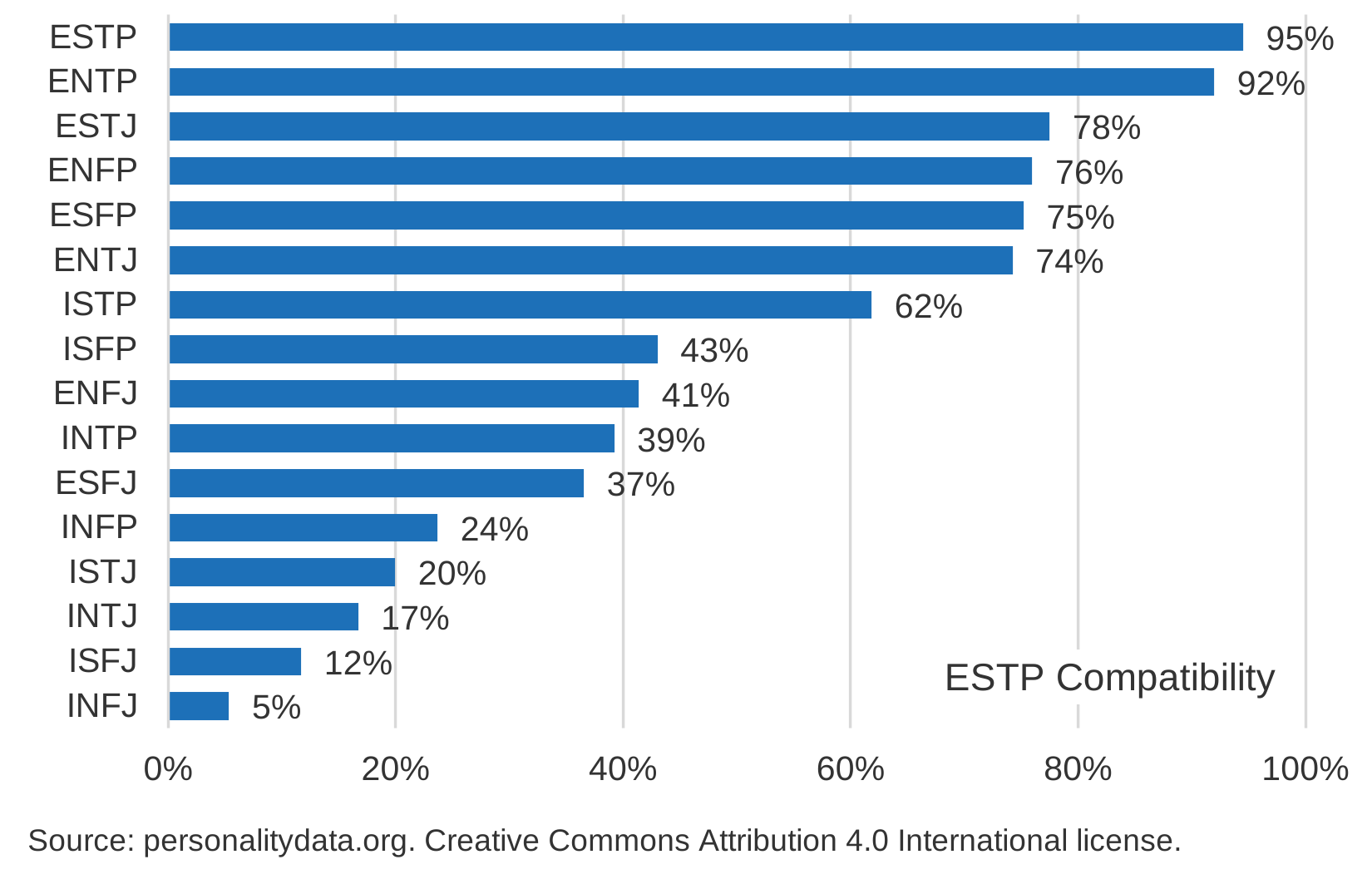
Figure 1: ESTP partner compatibility
Percentage compatibility between ESTP and other types
What this chart shows
This chart shows an estimate of the compatibility between ESTP types and other types. We see that ESTP types are most likely to be compatible with other ESTPs, and least likely to be compatible with an INFJ. An ESTP could still like an INFJ, but generally they are more compatible with other types. This 'like-minds' effect is often the case (see Figure 2 below).
Notes:Figure 2: 16 type model partner compatibility
Percentage compatibility between the 16 factor model (Myers Briggs®) types

What this chart shows
This chart shows an estimate of the compatibility between Myers Briggs® types. Our research shows that the strongest match is usually with someone of the same type. Another general pattern we observe is extraverts are generally more compatible with other extraverts, and introverts are more compatible with other introverts. This data supports the adage "birds of a feather flock together” and discredits the often-quoted mantra "opposites attract".
Across almost all types, the most compatible combination is with someone of an identical type. Within this general trend, the degree of compatibility varies slightly. For example, the compatibility between two INFP types is very high (at 95%) whereas the compatibility between two INTJs is 86%. The only exception to the observation that the best match is with someone of the same type is for ESFP types. The researchers note that ESFP types do still strongly favor other extraverts.
Notes:ESTP types are known for their illuminating personalities drawing in those around them for what they have to offer in a relationship. However, they have some traits and tendencies that are better left for later dates once their date has warmed up to them and become familiar with their intense energy. It's important they are aware of which cards they should play on the first dates so they are able to make it to later dates.
 Share your love of adventure! It lets others know you are not afraid to take charge and try new things.
Be your flirtatious, happy self while also remembering that others may not be as loud or outgoing as you are, but still have a lot to bring to the table.
Share your hobbies and favorite activities! It will allow for many opportunities to have a great conversation and to see if you have any shared interests!
Make sure you are upfront and honest about how much freedom and independence you seek out in a relationship. Others may not feel the same way, and will appreciate your directness from the beginning.
Share your love of adventure! It lets others know you are not afraid to take charge and try new things.
Be your flirtatious, happy self while also remembering that others may not be as loud or outgoing as you are, but still have a lot to bring to the table.
Share your hobbies and favorite activities! It will allow for many opportunities to have a great conversation and to see if you have any shared interests!
Make sure you are upfront and honest about how much freedom and independence you seek out in a relationship. Others may not feel the same way, and will appreciate your directness from the beginning.
 hen you bring up your lack of desire for commitment in a relationship, make sure you listen to their concerns and do not laugh them off to avoid dwelling on the topic.
Avoid coming off so flirtatious that you are deemed as hedonistic.
Do not try to push your partner outside of their comfort zone right away. It is important to respect their boundaries and know just how far they are truly willing to go.
hen you bring up your lack of desire for commitment in a relationship, make sure you listen to their concerns and do not laugh them off to avoid dwelling on the topic.
Avoid coming off so flirtatious that you are deemed as hedonistic.
Do not try to push your partner outside of their comfort zone right away. It is important to respect their boundaries and know just how far they are truly willing to go.
ESTPs have certain personality traits and relationship desires people need to keep in mind when pursuing a relationship with them. If you are not aligned with their wants, needs and expectations, it can be difficult to have any sort of relationship with an ESTP.
Here are a couple of tips on dating an ESTP:
Make sure you are honest with them about your expectations for the amount of freedom and independence you need, but also are willing to give them.
If an ESTP is coming off too strong or extremely ambitious in the plans they have for you or for the relationship in general, remember they are simply trying to do something they think you would enjoy. Even if it means pushing you outside of your comfort zone. This is something your ESTP partner will do quite often!
Remember they do not like to dwell on situations, and will try to resolve conflict in a timely manner. This can sometimes lead them to acting impulsively, and occasionally irrationally. It's important to keep them grounded and to talk about a situation when it needs to be talked about, but also not to drag out a situation that can be resolved quickly.
Share your goals, dreams, desires, and adventures with them! They love to dream big and chase down ambitious goals!
Make sure you keep your word of giving them the freedom and autonomy they desire. If it becomes too much for you, it is a conversation you need to have with them because this is a trait you will have known about from the very beginning.
Do not try to make a lot of plans, or create a long-term plan of commitments. ESTPs do not like plans, they prefer their spontaneous, go with the flow lifestyle.
Do not make them feel trapped within the relationship. If they sense too much commitment, they will feel they have lost the freedom and independence they desire within a relationship.
Do not immediately lash out at your ESTP partner if they say or do something insensitive. Have a respectful conversation with them about what happened because they tend to have a hard time tuning in to what others are feeling or thinking. Be direct and tell them this is something you need from them, and then move on from the conversation.
Do not be lazy, immerse yourself into chasing down your goals and dreaming big. ESTPs thrive in relationships when they are met at their level of adventure. When they are not met, it can be hard to stay in the relationship because of their lack of desire for commitment.
ESTP types draw people in with their natural confidence and assertiveness. They are charming, warm, honest, and friendly people who inspire their friends to want to be better, and to live their life in the moment. ESTPs love having a tight knit group of friends, while also being able to have the freedom to do what they want. ESTPs are honest and straightforward in their friendships. When conflict arises, they are direct in saying how they feel and voicing their opinion. They do not like to intervene or to dwell on situations, and expect the same honesty within their friendships.
ESTPs are always the life of the party, easily able to make new friends and bring people together.
ESTPs are commonly known to have a kinesthetic intelligence. Also known as someone who will always land on their feet when they fall, and are capable of playing any sport well. There are few things that can stand in the way of an ESTP friendship and a good time. ESTPs have an inexhaustible thirst for adventure, and share this with their friends. They are always making plans that offer excitement, novelty, and almost always present a challenge. Just as they do within their love relationships, they continuously push their friends to go outside of their comfort zones.
ESTPs bring an inspiration to their friendships that are constantly providing opportunities for growth. ESTP types get extremely bored with routines, and are always using their imagination to kick start their next adventure with their best friend. This trait has earned them the title of being the life of the party, and the zest to everyone's life.

ESTPs are very confident and like adventurous activities. A very close friend of an ESTP will be someone who is equally active and go-getting.
ESTPs provide an unparalled warmth, acceptance and honest friendship. Being friends with an ESTP, you can always count on a life full of adventures, with not one day being the same, requiring you to soak up every single moment.
It can seem that ESTPs see friendships as simply their next adventure, but to them being in a friendship is one of life's greatest adventures. It's important an ESTP takes the time to listen to their friends and connect with them on an emotional level without getting carried away in the excitement of adventure and being self-reliant within their friendships.
As an ESTP, this is what you could do to improve relationships with other people:
University of Bath, Psychology
Ellie Simmonds, MSc in Psychology from University of Bath. Ellie is an associate lecturer on psychometric assessments and has extensive knowledge of the 16-type model.
 ESTP Extended Subtypes
